

Rabona casino Plinko
Introduction
Plinko looks almost disarmingly simple at first glance. You set a stake, choose a risk level, release a ball, and watch it bounce through a field of pegs until it lands in a payout slot. That is the entire visible structure. But in practice, Rabona casino Plinko is one of those casino games where the gap between visual simplicity and real session behaviour is much wider than many players expect. Before you make a deposit, it is worth reading Rabona Casino coupons with terms and limits for the fee and speed details.
I have always found Plinko interesting for one specific reason: it removes almost all decorative noise. There are no reels, no paylines, no Rabona Casino bonus review rounds dressed up as adventures, and no long rulebook. What remains is a very exposed form of randomness. Every drop feels easy to understand, yet the outcomes can vary sharply depending on board settings, row count, and selected risk profile. That is exactly why the game attracts attention from both casual players and people who usually prefer faster, more transparent formats.
For players in Australia looking at Rabona casino Plinko, the key question is not whether the interface is easy to read. It is. The real question is what this straightforward layout actually means for bankroll movement, pacing, and expectation over a real session. That is what I will break down here: how Plinko works, why it feels different from slots, where the tension comes from, and what a player should understand before pressing drop.
What Plinko is and why it keeps drawing players in
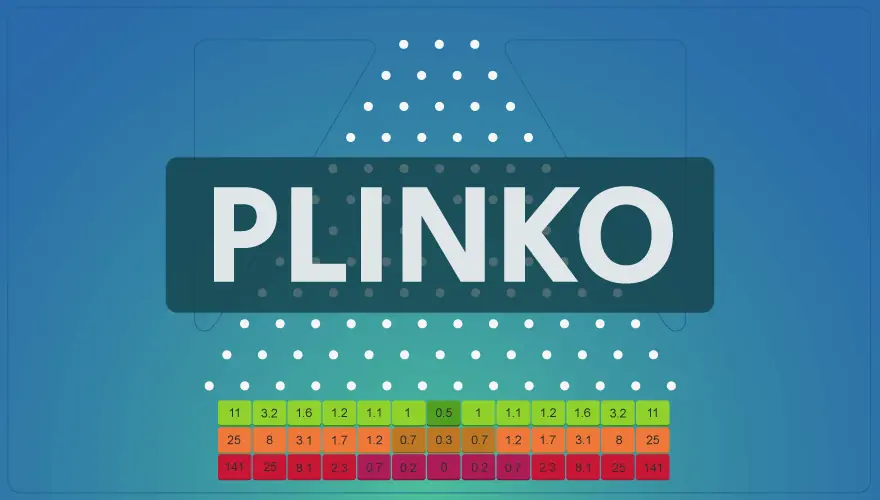
Plinko is a chance-based casino game built around a vertical board filled with evenly spaced pegs. A ball drops from the top, collides with pegs on the way down, and eventually lands in one of several slots at the bottom. Each slot has its own multiplier. Lower multipliers usually sit near the centre, while the highest multipliers tend to be placed on the far edges, where the ball reaches less often.
The reason Plinko became so noticeable is not just that it is easy to learn. It is that the game delivers immediate visual feedback. In many other formats, randomness is hidden behind spinning reels, card distribution, or complex animations. Here, the path is visible. You can literally watch a result develop in front of you. That creates a strong sense of involvement, even though the underlying outcome is still governed by probability rather than skill. The full picture of payment methods lives in Rabona Casino legality for Australian players, including the less common ones.
Another reason for its visibility is the speed of interpretation. A new player does not need ten rounds to understand what happened. One glance is enough: the ball fell, bounced left and right, then settled on a multiplier. That clarity lowers the entry barrier. At the same time, it can mislead some players into thinking the game is more controllable than it really is.
That tension is central to Rabona casino Plinko. It feels readable, but it is not predictable in any practical sense. The board shows you the journey. It does not give you influence over the destination.
How the Plinko mechanics actually work in play
At a functional level, Plinko is built around a few core variables: stake size, number of rows, risk level, and the payout map assigned to the bottom slots. The player selects the amount to wager, chooses a board setup where available, and then drops one ball or a series of balls. Each collision sends the ball slightly left or right until it reaches a final slot.
That sounds almost too simple, so it helps to separate the visible process from the mathematical logic behind it.
Visually, the ball appears to travel through a chain of tiny deflections. In probability terms, each contact contributes to a branching path. Over many rounds, outcomes cluster more often around the middle of the board, while edge landings remain less frequent. This is why the central slots usually carry smaller multipliers and the outer slots carry larger ones.
The part many players underestimate is how strongly the selected risk mode changes the profile of the session. In lower-risk settings, the distribution is flatter in terms of emotional impact: more modest returns, fewer dramatic spikes, and a steadier feel. In higher-risk settings, the board becomes much more aggressive. Small or very low multipliers appear more often, while the top-end rewards become more eye-catching but meaningfully rarer. When the support team feels slow, chicken road guide explains the fastest ways to reach them.
| Element | What it changes | What it means in practice |
|---|---|---|
| Stake size | The value of each drop | Directly affects how fast the balance moves up or down |
| Rows | The number of bounce decisions before landing | Can alter distribution shape and the spacing of multipliers |
| Risk level | The payout structure across the board | Changes whether the session feels smoother or more swing-heavy |
| Auto-drop options | The pace of repeated rounds | Can speed up losses and reduce decision awareness if used carelessly |
One of the most useful ways to think about Rabona casino Plinko is this: the pegs create the illusion of a journey, but the real identity of the game is defined by payout distribution. The board is the stage. The multiplier map is the script.
Why the game feels engaging and how the pace shapes the session
Plinko creates engagement through short cycles of tension. Each round is brief, but not instant. There is a fraction of a second where the outcome is unresolved and still visible. That delay matters more than it seems. It gives the player time to project hope onto the path of the ball, especially when it drifts toward a high-value edge before bouncing back toward the centre.
That visibility changes how the session feels compared to a standard slot, where the outcome is decided the moment the reels stop and the near-miss is only implied by the symbols that land. Plinko's pace is also steadier, with each drop lasting a few seconds from release to landing, so a player gets a constant rhythm of small results rather than the sudden, all-at-once resolution of a spin. Most players expect a slot session to build tension through bonus rounds and free spins; here, the tension is rebuilt on every single drop, which tends to make the session feel shorter overall even when the number of decisions made is similar.
That visibility is part of the appeal, but it also changes how a session feels psychologically. The game can seem calm because the interface is clean, yet it often produces a stronger moment-to-moment tension than its minimalist design suggests. I would describe it as quiet pressure rather than loud excitement.
The pace also deserves attention. Since each round resolves quickly, the game can move from casual curiosity to rapid repetition with almost no friction. This is especially true when auto mode is enabled. A player may think they are choosing a measured format because there are no spinning reels or cinematic features, but the actual betting tempo can be very high.
That is one of the more important practical observations with Rabona casino Plinko: the game looks slower than it is. The board animation makes each drop feel substantial, yet the cycle length is short enough for a bankroll to change quickly.
Risk levels, probabilities, and who should treat Plinko cautiously
Plinko is often described as simple, but the risk profile is not simple at all. It is adjustable. That sounds helpful, and it can be, but it also means two players can launch what appears to be the same game and have completely different sessions.
In low-risk mode, the board usually offers a denser concentration of small and medium multipliers. You are less likely to see extreme jumps, but you may also feel that the session lacks punch. In high-risk mode, the opposite happens. The attractive top multipliers become the headline feature, but the route to them is much harsher. Long stretches of underwhelming outcomes are more likely, and bankroll swings become sharper.
There is no setting that “beats” the game. There is only a setting that better matches a player’s tolerance for variance and session goals.
- Low risk suits players who want longer sessions and less violent balance movement.
- Medium risk often appeals to those looking for a compromise between stability and occasional spikes.
- High risk is closer to a hit-chasing format, where patience and loss tolerance matter much more.
It is also important to understand what probabilities mean here. Because the ball’s path is visible, some players start reading patterns into short sequences. A few centre landings in a row can make an edge hit feel “due.” A rare high multiplier can make another one feel possible in the next few drops. In reality, each round is an independent event shaped by the game’s random logic and payout structure.
This is where Plinko can be deceptive. The board gives the eye something to follow, and the mind starts building stories around movement. But probability does not care about those stories. A beautiful bounce sequence and a dull centre landing still count as the same practical result: a low return.
What a player should know about session rhythm and likely outcomes
If I had to summarise the real session rhythm of Rabona casino Plinko in one sentence, I would say this: the game alternates between routine and sudden contrast. Most drops are there to build the pattern of the session. A minority of drops change how the session feels.
That matters because many players approach Plinko expecting a constant stream of dramatic moments. In practice, the game often delivers long stretches of ordinary landings punctuated by occasional meaningful hits. The exact shape depends on settings, but the underlying experience is rarely as uniformly exciting as highlight clips make it look.
There are three practical consequences:
- The game can feel repetitive if you are expecting layered features or evolving bonus states.
- The emotional weight of a session often rests on a small number of standout results.
- Changing risk level can alter not just payout potential, but your patience threshold.
Another point worth stressing is that Plinko is not a progression game. It does not build toward a feature round. It does not unlock a second phase. It does not accumulate symbolic momentum the way some slots do. Every drop is self-contained. For some players, that is a strength because the format stays transparent. For others, it can feel too flat over time.
A memorable detail I have noticed with Plinko sessions is that players often remember the path more vividly than the return. That is unusual. In many casino formats, the result dominates memory. In Plinko, the visual route can become part of the emotional impression, even when the multiplier itself was not especially strong.
How Plinko differs from slots and other casino games
The easiest comparison is with classic slots, because that is where many players come from. But Rabona casino Plinko does not behave like a reel-based product in any meaningful day-to-day sense.
| Format | Main driver of engagement | Typical player experience |
|---|---|---|
| Plinko | Visible ball path and payout distribution | Fast, transparent, repetitive, tension built through trajectory |
| Classic slots | Reels, symbols, bonus rounds, feature triggers | Layered presentation with more audiovisual stimulation |
| Roulette | Single-spin outcome on a wheel | Clear betting logic, less visual path development |
| Crash-style games | Timing a cashout before the round ends | Decision-based tension rather than passive observation |
The key differences are easy to state but important to understand:
Plinko discards the narrative dressing that gives slots their flavour — no themed symbols, bonus-story cutscenes or character-driven features carry the entertainment. Attention rests entirely on the mechanical drop of the ball and the anticipation of where it lands, making each descent a self-contained moment of tension rather than a chapter in a longer game arc.
Second, it gives more visual transparency than most slot sessions. You see a path unfold instead of watching a result appear. That does not make it more beatable, but it does make it feel more tangible.
Before releasing the ball, confirm whether the game shows the house edge or RTP figure in its information panel, since Plinko payouts are set by the multiplier table rather than by symbol combinations. Check the volatility setting if the game offers adjustable risk levels, because low, medium and high modes shift the payout distribution noticeably. A quick look at the bet-size limits matters too, as the minimum wager can sit higher than a typical slot's base spin. Finally, verify whether your chosen casino counts Plinko rounds toward wagering requirements in the same way as slots, since some promotions exclude it.
Fourth, the betting loop is extremely compact. That makes Plinko closer to a rapid probability toy than to a traditional feature-driven slot. Whether that is appealing depends heavily on what a player wants from a gambling session.
Practical strengths and weak spots of Rabona casino Plinko
Plinko has genuine strengths, but they are not universal strengths. They depend on the kind of player sitting down with it. Table game fans will get more out of this review after reading real money casino safety.
Its clearest advantage is accessibility. The learning curve is minimal, and the interface usually makes the logic of the board easy to grasp. A player can understand the core structure almost immediately.
Another strength is transparency of feel. I do not mean transparency in the sense of seeing the RNG itself, which of course remains behind the scenes. I mean that the game does not hide its identity under layers of theme and animation. You know very quickly whether you enjoy this rhythm or not.
It also works well for players who prefer short, self-contained rounds. There is no need to wait for a bonus trigger or track a complicated paytable. This can make Rabona casino Plinko a practical choice for brief sessions.
But there are limitations.
The first is repetition. Because the structure does not evolve, the game can become monotonous faster than a good slot with varied features. If a player needs changing states, unlockable rounds, or thematic progression, Plinko may feel thin.
The second is the mismatch between simplicity and bankroll impact. Many people underestimate how quickly repeated low-value outcomes can drain a balance, especially on high-risk settings or in auto mode.
The third is that the visible path can create false intuition. Watching the ball bounce gives the session a tactile quality, but it does not provide useful predictive information for the next drop.
One of the sharpest observations I can make here is this: Plinko often feels fairer than it feels forgiving. Those are not the same thing. The board is readable. The session can still be brutal. For a closer look at the games library, free chips checklist sorts the titles by theme and pace.
What to check before launching a Plinko session
Before starting Rabona casino Plinko, I would focus on a few practical checks rather than treating it like a casual click-and-see experiment. The game rewards clarity of expectation more than optimism.
- Look at the risk setting first. Do not treat it as a cosmetic option. It defines the shape of the session.
- Understand the multiplier spread. The headline top value matters less than how often the board pays small returns.
- Set a pace. Manual drops and auto drops produce very different levels of awareness.
- Use demo play if available. This is one of the few formats where a short test can quickly show whether the rhythm suits you.
- Decide what counts as a successful session. Are you looking for steady entertainment, or are you chasing occasional spikes?
This last point matters more than it may seem. Plinko can satisfy two very different player motives: controlled repetition and high-contrast chasing. Problems start when a player chooses one mode but emotionally expects the other.
For Australian players in particular, the practical value of trying a demo version first is high. Because the interface is so simple, a short unpaid session reveals a lot. You can immediately judge whether the drop speed, bounce animation, and reward profile feel engaging or merely mechanical.
Who Plinko suits best and who may prefer another format
Plinko tends to suit players who value clarity, fast rounds, and visible outcome development. If you like watching probability unfold in a clean, stripped-back environment, the format has a lot to offer. It can also appeal to players who are tired of overdesigned slots and want something more direct.
It is less suitable for players who need strategic input, evolving bonus structure, or strong thematic immersion. If you enjoy making decisions during the round, a crash game may be more satisfying. If you want layered features and more varied pacing, slots will usually offer more depth over longer sessions.
There is also a personality factor. Players comfortable with repetition and statistical thinking often appreciate Plinko more than players who need constant novelty. The game does not pretend to be an adventure. It is a compact randomness engine with a visible path.
That honesty is part of its appeal. It is also the reason some people bounce off it quickly.
Final verdict on Rabona casino Plinko
Rabona casino Plinko offers a very specific kind of casino experience: fast, minimal, visually transparent, and heavily shaped by risk settings. Its biggest strength is that it makes the core tension of chance easy to see. You are not decoding paylines or waiting for bonus triggers. You are watching a single event unfold from release to landing.
That simplicity is real, but it should not be confused with softness. The game can be volatile, especially when players move toward higher-risk setups in search of standout multipliers. It is easy to start, easy to follow, and just as easy to underestimate.
I would recommend Plinko to players who want direct gameplay, quick rounds, and a format where the session rhythm is immediately understandable. I would be more cautious with it for players who dislike repetition, need more interactive control, or tend to chase rare top-end outcomes after a string of ordinary drops.
In practical terms, Plinko is not about depth in the traditional slot sense. It is about concentration of tension. If that sounds appealing, Rabona casino Plinko is worth trying. If you want richer progression, stronger variety, or more decision-making, another format will probably suit you better.
The honest conclusion is simple: Plinko does one thing, but it does that one thing very clearly. For the right player, that clarity is exactly the point.
FAQ
What does Plinko gameplay involve?
Plinko is a ball-drop game where each launch sends a ball through pegs and into a payout zone with a multiplier.
How does the multiplier work when a ball lands?
Each landing zone carries a multiplier that applies to the stake of that round. Multipliers can increase or decrease depending on where the ball finishes, so the same stake can produce different results.
Is Plinko played for real money or in demo mode?
Both options are available. Demo mode uses virtual funds for practice, while real-money play uses the account balance.
How can a player launch Plinko quickly on an official site account after sign up?
Log in via casino login, open the casino games lobby, and select Plinko from the slot or game section. When the game loads, choose real-money mode and confirm the stake, then launch the ball.
What changes when switching between demo mode and real-money play on Rabona?
The main difference is the funds source and the account impact. Demo mode is for practice only, while real-money play deducts stake from the balance and must follow the account limits.
What happens if the Plinko game takes too long to load or a round fails to start?
Refresh the game tab and try launching again after a short wait. If the issue continues, try a different browser or switch networks, then log out and back in to refresh the session.
Where do limits affect Plinko, and what should be verified before a larger session?
Deposit, withdrawal, and wagering-related limits on the account can affect how much can be used in real-money play. Check any active casino limits in the cashier or account settings before raising stake sizes.
What common beginner mistake should be avoided during the first Plinko session?
Launching with an unexpected stake is the most frequent issue. Always verify stake and round settings, especially after switching devices or returning to the game mid-session.